Turtle Soup Trading Strategy: ICT's Liquidity Trap Setup
Turtle Soup is ICT's counter-trend strategy that targets false breakouts of prior 20-day highs and lows. Learn how to identify and trade this liquidity trap setup.
What Is the Turtle Soup Trading Strategy?
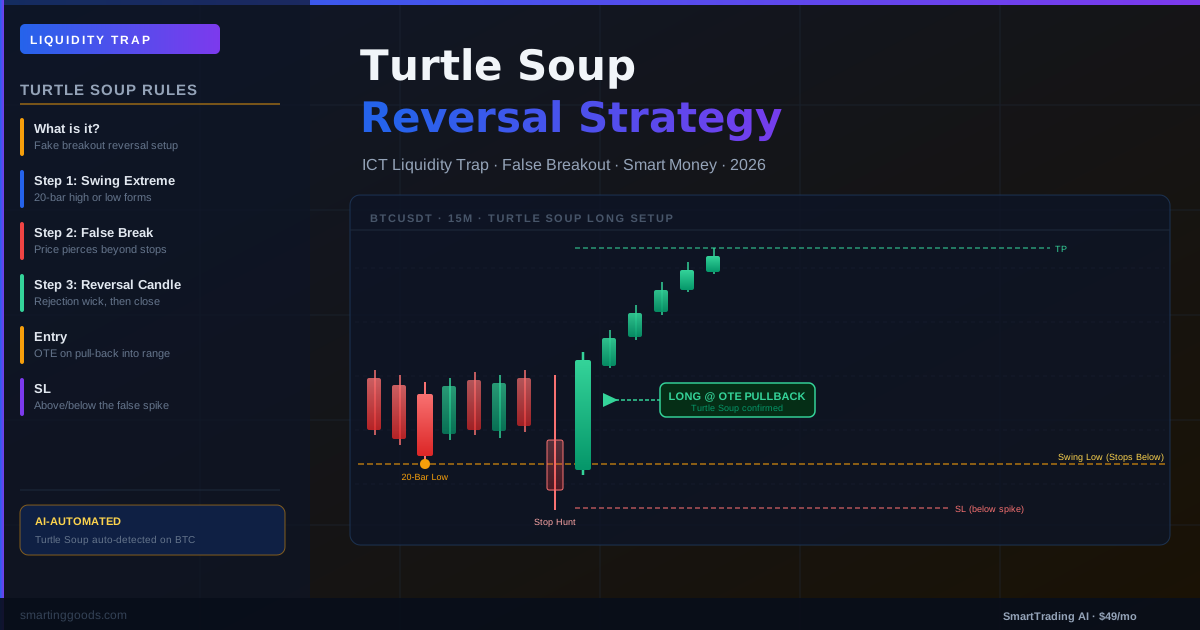
The Turtle Soup trading strategy is ICT's counter-trend entry technique that exploits one of the most predictable patterns in financial markets: the false breakout of a prior period high or low. The name is a direct reference to the famous Turtle Traders of the 1980s, who bought breakouts of 20-day highs and sold breakouts of 20-day lows. Turtle Soup is the counter — you fade those exact breakouts after they fail.
The logic is straightforward: the 20-day high and 20-day low are universally watched levels. Every breakout trader, trend-following algorithm, and Turtle-inspired system is buying a break above the 20-day high. That concentration of buy orders creates a massive stop cluster just above the level (where breakout traders will place stops if the trade goes wrong). Market makers sweep that level to collect the stop orders, then reverse.
How Turtle Soup Works Step by Step
Identify the Liquidity Level
Mark the prior 20-day high and 20-day low on your chart. These are the primary targets. You can also use prior weekly highs/lows, Equal Highs (EQH), or prominent swing points that have been tested multiple times — any level with a visible concentration of retail stop orders qualifies.
Wait for the False Breakout
Price breaks above the 20-day high (for a bearish Turtle Soup) or below the 20-day low (for a bullish Turtle Soup). This initial break is not your entry — it's your trigger to watch. Let the breakout candle close. If it closes back below the 20-day high (for shorts) or above the 20-day low (for longs), you have a failed breakout.
Enter on the Failure
The failed breakout — where price penetrates the level then closes back — is your entry signal. For a bearish Turtle Soup: enter short when the breakout candle closes below the 20-day high, or on the first candle that breaks below the penetrating candle's low. For a bullish Turtle Soup: enter long when the breakout candle closes above the 20-day low.
Stop Loss and Target
Stop loss goes 1-3 ticks above the false breakout high (for shorts) or below the false breakdown low (for longs). Target: the midpoint of the prior range, then the opposite 20-day extreme. Turtle Soup entries have some of the tightest stops in ICT methodology because you're entering right at the manipulation high/low.
Turtle Soup vs. Liquidity Sweep — What's the Difference?
These concepts overlap significantly. A liquidity sweep is the general ICT term for any price move that hunts stops above/below a key level. Turtle Soup is the specific application of that concept to prior 20-day highs/lows with a defined entry framework. All Turtle Soup setups involve liquidity sweeps, but not all liquidity sweeps are Turtle Soup setups (a sweep of a 5-minute high is a sweep, not Turtle Soup).
Why Turtle Soup Works in Crypto Markets
Algorithmic trading has made false breakouts more common, not less. Every sophisticated algorithm knows the Turtle Trader rules and has stops placed accordingly. Bitcoin's 24/7 market with deep derivatives participation means the 20-day high/low levels accumulate enormous stop clusters. When BTC sweeps a prior week's high by 0.5% and then collapses, that's often a textbook Turtle Soup — institutional players liquidating retail longs who bought the breakout.
The New York open and London open sessions (ICT Kill Zones) are the most common execution windows for Turtle Soup setups on Bitcoin Binance Futures.
Automating Turtle Soup Entries
Turtle Soup requires precise timing — the entry window is often only a few minutes after the failed breakout candle closes. The Smarting Goods AI trading bot monitors prior 20-day highs and lows on Binance Futures, detects when price sweeps and then closes back inside the range, and executes the Turtle Soup entry automatically within the failed breakout window.
Access the SmartTrading AI platform to automate Turtle Soup and other liquidity sweep strategies on Bitcoin futures.
Frequently Asked Questions
What is Turtle Soup in trading?
Turtle Soup is a counter-trend strategy that fades false breakouts of 20-day highs and lows. When price breaks above a 20-day high but closes back below it, Turtle Soup traders go short — exploiting the stop hunt that the false breakout created.
Why is it called Turtle Soup?
The name references the famous Turtle Traders, who were trained to buy 20-day high breakouts and sell 20-day low breakdowns. Turtle Soup is the opposite trade — you're "making soup" out of the Turtles' failed breakout stops.
Does Turtle Soup work in crypto?
Yes. Bitcoin futures on Binance show frequent Turtle Soup setups, especially sweeps of prior weekly highs and lows at New York and London session opens. The high leverage environment in crypto derivatives amplifies the stop-hunting behavior Turtle Soup is designed to exploit.
What is the stop loss for Turtle Soup?
Place your stop 1-3 ticks above the false breakout high (for short entries) or below the false breakout low (for long entries). This keeps risk extremely tight since you're entering right at the manipulation extreme.
How do I automate Turtle Soup setups?
The Smarting Goods AI bot monitors 20-day highs/lows and prior swing extremes on Binance Futures, detecting false breakouts and executing Turtle Soup entries automatically when the setup confirms.